
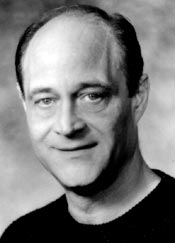
[Description by Uncle Ricky]
This studio recording of Richard W. Fatherley (d. March 8, 2010) features Fatherley’s original paper prepared for the second gathering of The Great Plains Radio History Symposium in Manhattan, Kansas, on September 21, 2007. While many recognize the contribution of Todd Storz to the history of Top 40 radio, few recognize his contribution to the format that now dominates AM radio  Telephone Talk.
Fatherley makes a convincing presentation, beginning with a short history of WHB’s Roving Microphone show, broadcast from the coffee shop of the Pickwick Hotel in Kansas City. Called Nightclub Of The Air, it was hosted by WHB DJ Wayne Stitt. The show featured popular music and interviews with hundreds of people who showed up at the Pickwick between 10PM and 1AM.
Fatherley explains how a “unique multipath radio distribution amplifier”, called MultiPhone, invented by Dale Moudy, the Director of Engineering for Todd Storz, revolutionized radio talk shows. At Storz property WHB in Kansas City, a seven-second delay, created by a 52-inch tape loop, was used to prevent the unwelcome broadcast of profane or obscene language. A new host, Lee Vogel, discussed controversial subjects. The name of the program was changed to NiteBeat.
Quoting Fatherley, “Thus, was born at WHB, the democratization of radio.” Telephone talk programming was so successful in Kansas City that Todd Storz took it to his stations in Minneapolis (WDGY) and Miami (WQAM). Just as it was with the original Storz Top 40 format, telephone talk was copied coast to coast by American broadcasters.
Fatherley continues with more history of Storz telephone talk. There’s a suicide, a nervous breakdown, and a recollection that hosts were encouraged to play the listeners like records.
Storz (d. 1964) did not introduce his talk programming on the last two stations he purchased, KOMA in Oklahoma City and KXOK in St. Louis.